
by Ron Friedman
Originally published in Harvard Business Review • July 4, 2014
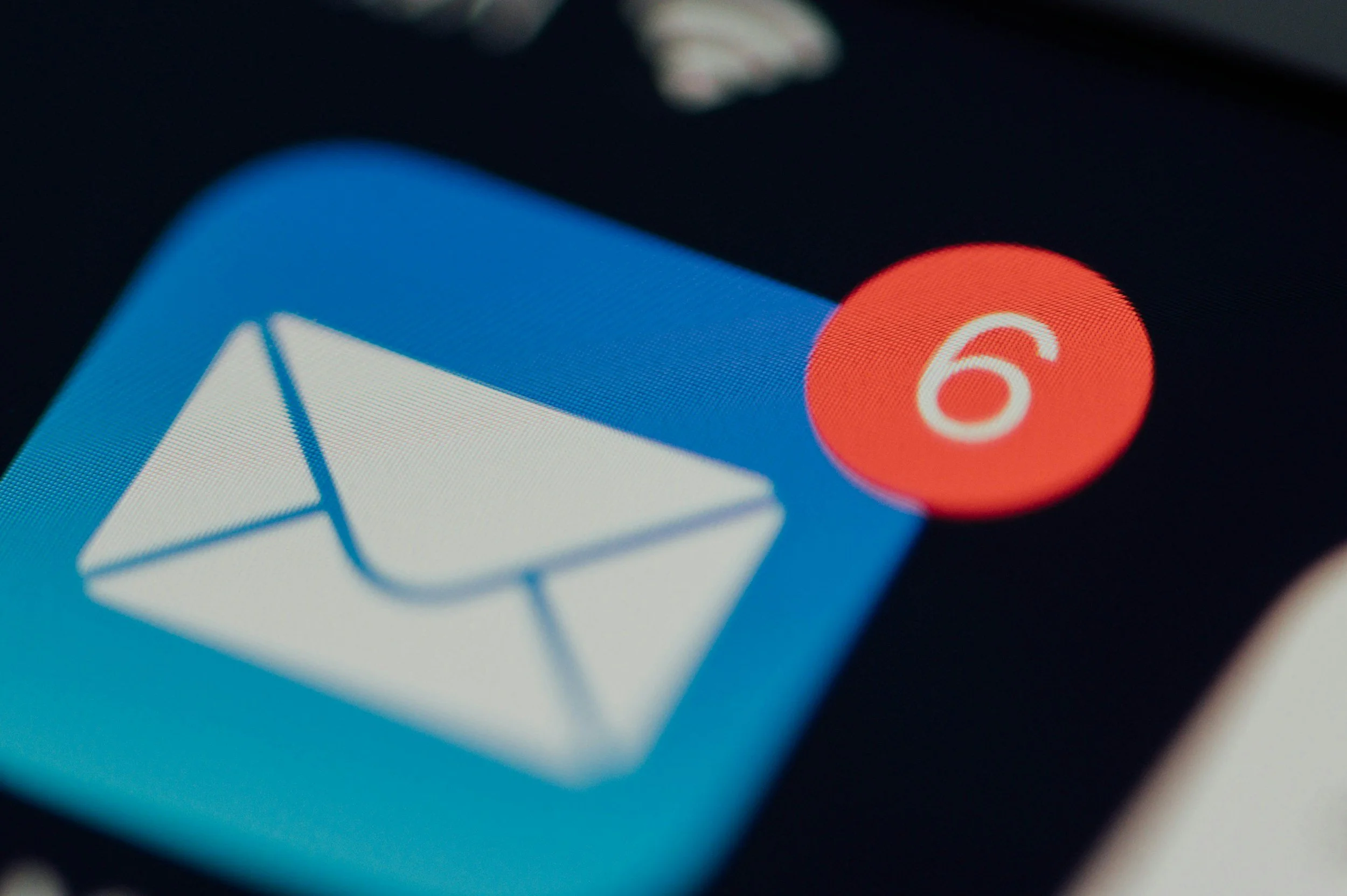
Most professionals think email steals a few seconds at a time. Behavioral science suggests the real cost is far greater. Every glance at your inbox carries a hidden penalty that lingers long after you've returned to your work.
Suppose each time you ran low on an item in your kitchen—olive oil, bananas, napkins—your instinctive response was to drop everything and race to the store. How much time would you lose? How much money would you squander on gas? What would happen to your productivity?
We all recognize the inefficiency of this approach. And yet surprisingly, we often work in ways that are equally wasteful.
The reason we keep a shopping list and try to keep supermarket trips to a minimum is that it’s easy to see the cost of driving to the store every time we crave a bag of potato chips. What is less obvious to us, however, is the cognitive price we pay each time we drop everything and switch activities to satisfy a mental craving.
Shifting our attention from one task to another, as we do when we’re monitoring email while trying to read a report or craft a presentation, disrupts our concentration and saps our focus. Each time we return to our initial task, we use up valuable cognitive resources reorienting ourselves. And all those transitional costs add up. Research shows that when we are deeply engrossed in an activity, even minor distractions can have a profound effect. According to a University of California-Irvine study, regaining our initial momentum following an interruption can take, on average, upwards of 20 minutes.
Multitasking, as many studies have shown, is a myth. A more accurate account of what happens when we tell ourselves we’re multitasking is that we’re rapidly switching between activities, degrading our clarity and depleting our mental energy. And the consequences can be surprisingly serious . An experiment conducted at the University of London found that we lose as many as 10 IQ points when we allow our work to be interrupted by seemingly benign distractions like emails and text messages.
The trouble, of course, is that multitasking is enjoyable. It’s fun to indulge your curiosity. Who knows what that next email, tweet or text message holds in store? Finding out provides immediate gratification. In contrast, resisting distraction and staying on-task requires discipline and mental effort.
And yet each time we shift our focus, it’s as if we’re taking a trip to the store. Creativity expert Todd Henry calls it a “task-shifting penalty.” We pay a mental tax that diminishes our ability to produce high-level work.
So what are we to do?
One tactic is to change our environment to move temptation further away: shut down your email program or silence your phone. It’s a lot easier to stay on task when you’re not continuously fending off mental cravings. This approach doesn’t require going off the grid for a full day. Even as little as 30 minutes can have a major impact on your productivity.
The alternative, which most of us consider the norm, is the cognitive equivalent of dieting in a pastry shop. We can all muster the willpower to resist the temptations, but doing so comes with considerable costs to our limited supply of willpower.
Another worthwhile approach is to cluster similar activities together, keeping ramp-up time to a minimum. Instead of scattering phone calls, meetings, administrative work, and emails throughout your day, try grouping related tasks so that there are fewer transitions. Read reports, memos and articles one after another. Schedule meetings back-to-back. Keep a list of administrative tasks and do them all in a single weekly session. If possible, try limiting email to 2 or 3 predetermined times—for example 8:30, 12:00 and 4:30—instead of responding to them the moment they arrive.
In some jobs, multitasking is unavoidable. Some of us truly do need to stay connected to our clients, colleagues, and managers. Here, it’s worth noting that limiting disruptions is not an all or nothing proposition. Even small changes can make a big difference.
Remember: it’s up to you to protect your cognitive resources. The more you do to minimize task-switching over the course of the day, the more mental bandwidth you’ll have for activities that actually matter.
Key Takeaway
Checking email may feel productive, but frequent interruptions quietly undermine the quality of our thinking. In this article, Ron Friedman explains how task-switching depletes cognitive resources, slows concentration, and makes complex work significantly more difficult.
Research shows that even brief interruptions can take many minutes to recover from, while constant switching between email and meaningful work reduces mental performance and creativity.
Rather than relying on willpower to resist distractions, the evidence suggests professionals should structure their environment and schedule to minimize unnecessary interruptions. Protecting attention isn't simply a matter of personal discipline. It's one of the most effective ways to improve the quality of knowledge work.
What This Means for Leaders
Most organizations think they have an email problem. In reality, they have an attention problem.
Email is simply one of many forces competing for employees' limited cognitive resources. Instant messages, meetings, notifications, and constant requests all create the same hidden cost: they fragment attention. While each interruption seems minor, together they prevent the sustained concentration that complex thinking requires.
This is why improving productivity isn't just about helping individuals manage distractions. It's also about designing workplaces that make focused work possible. Leaders influence far more than their own inboxes. They shape expectations around responsiveness, meeting norms, and availability. Those expectations determine whether employees spend their days reacting to incoming requests or making meaningful progress on their highest-value work.
The broader lesson is that attention is one of an organization's scarcest resources. The companies that consistently make better decisions, solve harder problems, and produce more innovative work are often the ones that protect it most deliberately.
More Harvard Business Review Articles by Ron Friedman
Ron Friedman has written more than 20 articles for Harvard Business Review exploring leadership, teamwork, workplace culture, motivation, and the science of high-performing teams.


See These Ideas in Action
The research in this article is one piece of a much larger puzzle.
For more than two decades, Ron Friedman has studied the behaviors that help leaders and teams perform at their best. His research spans leadership, teamwork, collaboration, workplace culture, motivation, and the science of high-performing teams, with insights published in more than 20 Harvard Business Review articles and three bestselling books.
Today, Ron brings those discoveries to organizations around the world, translating behavioral science into practical ideas leaders can apply immediately. He has taught more than 300,000 executives and delivered keynote presentations for organizations including IBM, Amazon, Boeing, Trader Joe's, Accenture, Kaiser Permanente, Sephora, ADP, MassMutual, and Baird.